
Sept. 1, 2023
He discovered a solvent for gold to save his life
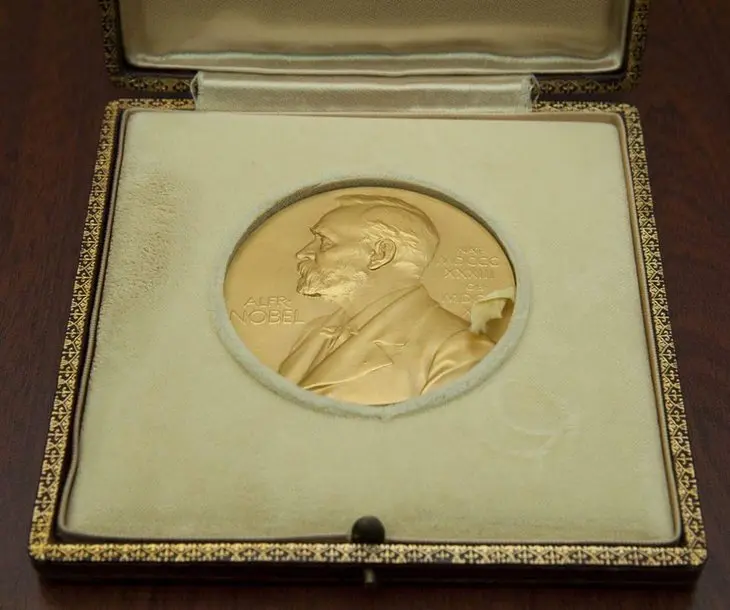
The story begins when the Nazis invaded Denmark during the Second World War. At the time, Nobel Prize-winning physicist Niels Bohr worked at the Institute for Theoretical Physics in Copenhagen.
György Hevesy, a Hungarian-born scientist who later also received the Nobel Prize, worked under him. On the day of the occupation, according to his memoir “Adventures in Radioisotope Research”, he arrived at the laboratory to find Bohr extremely nervous. During the war, the Nazis had forbidden anyone to take gold out of Germany. Bohr was hiding the Nobel medals of two persecuted German-born fellow scientists. These were large 23-carat gold medals engraved with their owners' names. If the Nazis found them, it would amount to a death sentence.
Hevesy first suggested burying them, but Bohr feared the soldiers would search and dig up every centimetre. Hevesy then decided to attempt what had previously seemed impossible: dissolve the gold.
Gold is one of the most resistant metals and reacts with almost no compound. Legend has it that Hevesy discovered the ingredients and, while occupying forces marched through Copenhagen, very slowly dissolved the gold Nobel medals in a special solvent. Aqua regia—a mixture of three parts hydrochloric acid and one part nitric acid—was born.
Bohr and Hevesy later fled Denmark, while the medals waited for the Nazis' defeat in a bottle in the laboratory. When Hevesy returned to the damaged laboratory after the war, he was surprised to find the solution still on the shelf. He recovered the gold and sent it to the Nobel Foundation, which recast it and returned the medals to their owners.
Photo: Tamás Szigeti, Hungarian Academy of Sciences